Imagine sitting in your room and, with the turn of a dial, having a casual conversation with someone thousands of miles away—no internet, no satellites, just the magic of radio waves. Talk around the world on a budget. This is the thrill of DX (long-distance) communication, and the 10-meter band is one of the most exciting and accessible gateways into this world. This guide will explain the magic of the 10 meter radio.
What Makes the 10-Meter Band So Special?
The 10-meter band (28.000–29.700 MHz) is a slice of the radio spectrum allocated to licensed amateur radio operators.
A Ham Radio Band with a "CB Feel"
Its proximity to the popular CB band (27 MHz) means it shares some similar characteristics, but with a crucial difference: it requires a license, which keeps the conversations more orderly and professional. It's the perfect stepping stone from local chatter to global communication.
Your Gateway to the World of HF (High Frequency)
The 10-meter band is the highest-frequency band in the HF (High Frequency) spectrum. These are the frequencies famous for bouncing off the Earth's upper atmosphere and returning to the ground hundreds or thousands of miles away.
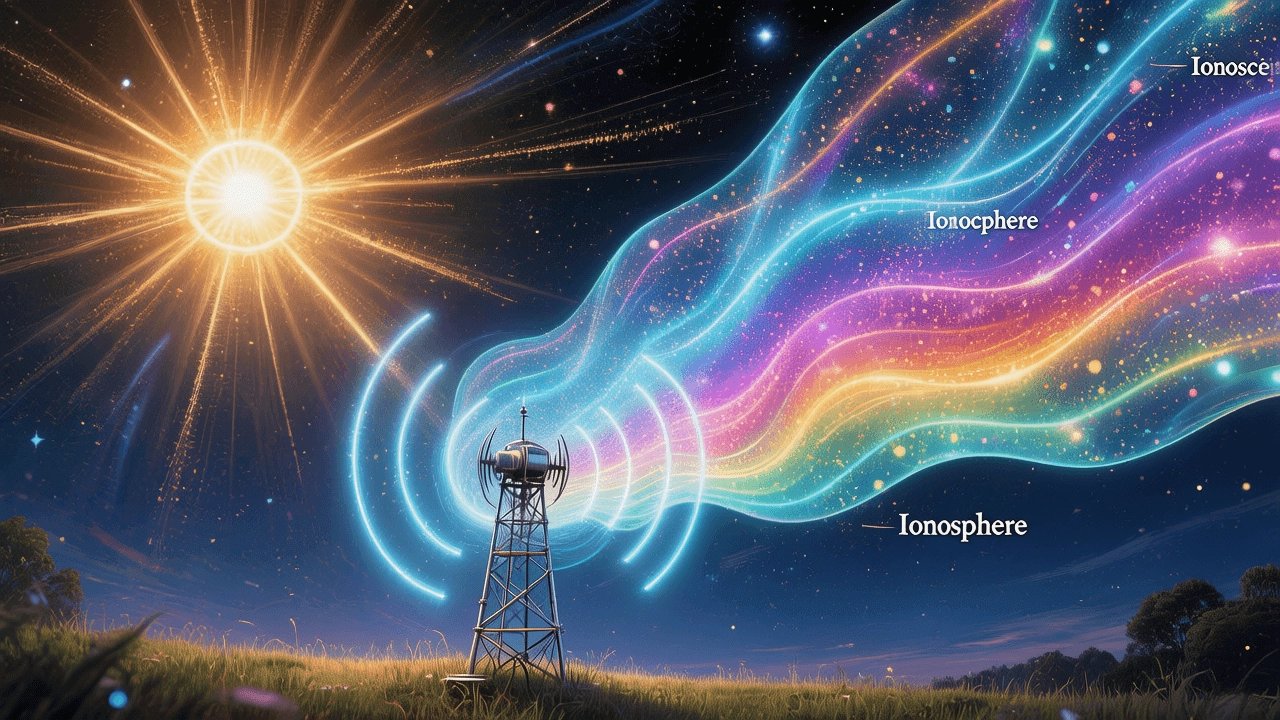
Riding the Sun's Waves: How the Solar Cycle Opens Up the Band
The secret to 10-meter DX is the sun.
Understanding Radio Wave Propagation (Ionosphere)
The Earth is surrounded by a layer of charged particles called the ionosphere. HF radio waves can bounce off this layer like a mirror. When conditions are right, a signal can make multiple "skips" between the ionosphere and the Earth, traveling enormous distances.
Why the Current
The sun goes through an approximately 11-year cycle of activity. During a solar cycle maximum, increased solar radiation energizes the ionosphere, making it more "reflective" to higher-frequency radio waves like those on the 10-meter band.
Seizing the Moment: The Band is Hot Right Now!
We are currently in Solar Cycle 25, which is proving to be much more active than predicted. This means right now is a golden age for 10-meter DX communication. The band is frequently "open" for intercontinental contacts, even with modest equipment.
The Power of SSB: Hearing a Whisper from a Thousand Miles Away
While you can use AM and FM on 10 meters, the real magic of DX happens on SSB.
What is SSB (Single Sideband)?
SSB is a highly efficient mode of transmitting voice. It concentrates all the transmitter's power into one "sideband" of the signal, rather than splitting it between a carrier and two sidebands like traditional AM.
Why an
Because it's so efficient, an SSB radio can make a weak, distant signal intelligible when it would be completely lost in the noise on AM or FM. For serious DXing, SSB is not just a feature; it's a necessity.
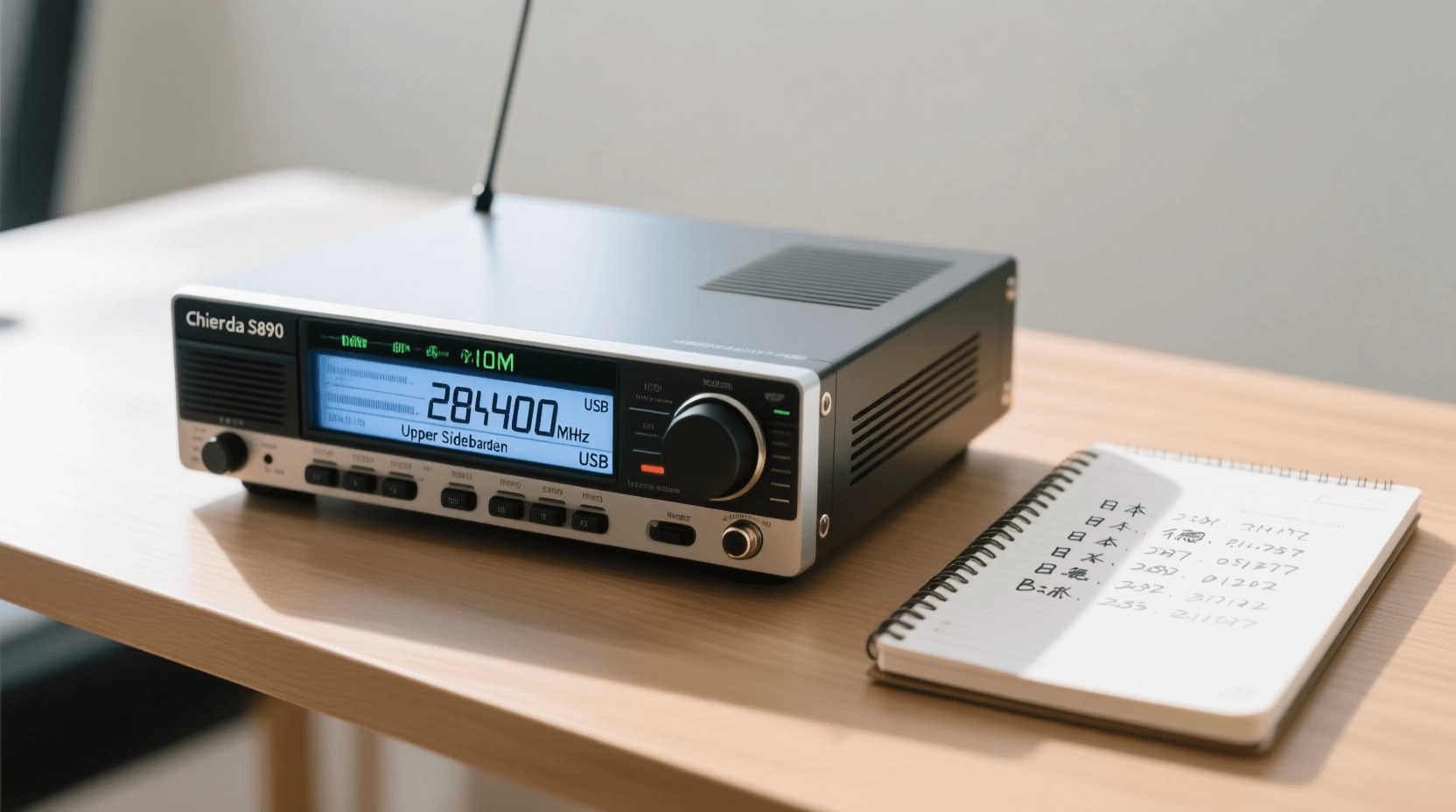
Choosing Your First 10-Meter Radio
When you're ready to buy your hf radio for beginners, here's what to look for:
Must-Have Features: The ability to operate on SSB (both Upper and Lower Sideband) is paramount. Other key features include a stable VFO (Variable Frequency Oscillator) so your frequency doesn't drift, and good RF Gain control to manage strong local signals.
A Perfect The Chierda S890 is an outstanding choice. It's a dedicated 10 meter radio that is purpose-built for this exciting band.
Why the S890's Power and Clarity Make it a DX Contender: With a powerful 40-watt output and excellent receiver clarity, the S890 has the muscle to transmit your signal around the globe and the sensitivity to pull in those weak, distant replies.
The Antenna: Your True Voice to the World
Your radio is only half of the equation. A good 10 meter antenna is critical. Simple and effective options like a vertical antenna or a wire dipole can be set up easily and deliver amazing results when the band is open.
The Sun is Active, the Band is Open. What Are You Waiting For?
There has never been a better time to get into 10-meter DXing. The solar cycle is in our favor, the technology is accessible, and a world of new friends is waiting to be discovered. Don't miss this golden opportunity to experience the true magic of radio.
FAQ: Your First 10-Meter DX Questions
What license do I need to operate on the 10-meter band?
In the US, the entry-level Technician Class amateur radio license grants you voice privileges on a portion of the 10-meter band using SSB. This makes it incredibly accessible for beginners.
What is the best time of day to try for 10-meter DX?
This depends on the solar cycle, but generally, the band is most active during daylight hours, often peaking in the mid-to-late afternoon.
Do I need a big antenna tower for 10-meter operation?
No! One of the great things about the 10-meter band is that the antennas are relatively small. A simple wire antenna strung up in your attic or between two trees can be very effective.
Can I use a 10-meter radio to talk on CB channels?
While the frequencies are close, it is illegal to use a 10-meter amateur radio to transmit on the Citizens Band (CB). These are separate services with different rules and equipment. Explore Chierda's full range of ham radios for your next adventure.