






More than just gas, the hidden explosion risk in your facility could be floating in the air. For industries dealing with everything from grain to metal shavings, understanding dust explosion prevention is a matter of life and death, and it starts with choosing the right equipment, including your combustible dust radio.
The Science of a Dust Explosion: The "Explosion Pentagon"
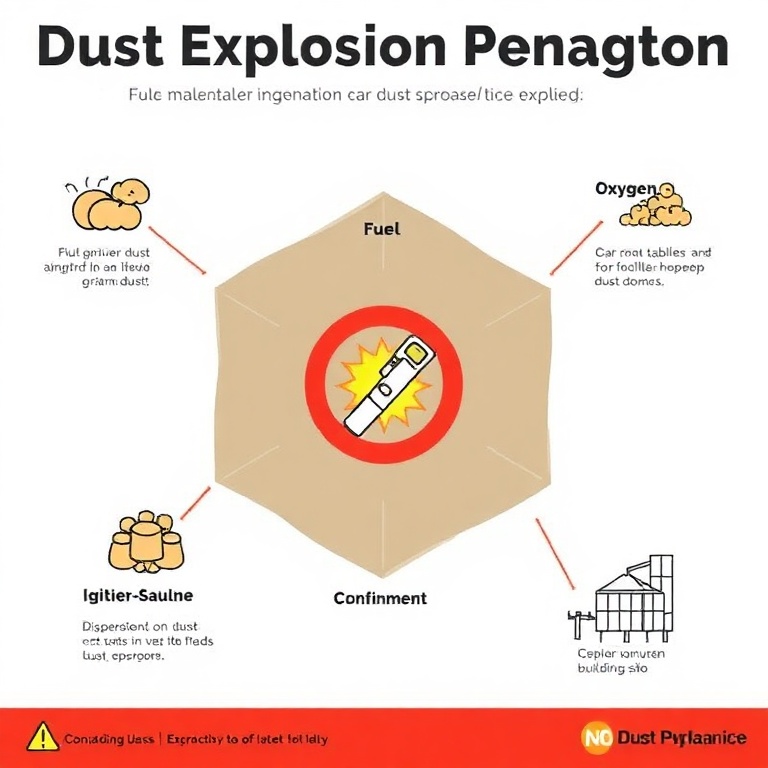
What is a dust explosion? It's the rapid combustion of fine particles suspended in the air. For this catastrophic event to occur, five elements must be present, often called the "Explosion Pentagon":
Fuel: The combustible dust itself (e.g., flour, sugar, wood dust).
Oxygen: The air in the facility.
Ignition Source: This is the critical element we can control. It can be a simple spark from static electricity, an overheated motor, or—critically—a non-certified electronic device like a standard walkie-talkie.
Dispersion: The dust must be suspended in the air at a sufficient concentration.
Confinement: The event happens within an enclosed space, like a silo, building, or piece of equipment.
Removing just one of these elements prevents an explosion. The easiest one to control is the ignition source.
Is Your Industry at Risk? Common Combustible Dusts
The risk is more widespread than many managers realize. According to OSHA, dozens of materials can become combustible when in dust form. Key industries include:
Food & Agriculture: Flour, sugar, powdered milk, and grain dust in elevators and silos (grain elevator safety is a major concern).
Wood & Paper Processing: Sawdust and paper dust.
Metal Dusts: Fine powders of aluminum, magnesium, and zinc can be extremely volatile.
Chemicals & Pharmaceuticals: Many powdered chemical and pharmaceutical products are combustible.
Decoding the Code: Understanding Class II Intrinsically Safe Ratings
To operate safely, you need a hazardous location radio with the correct certification. For dust, this means it must be rated for Class II environments.
Class II: The Rating for Combustible Dust. This certification ensures the radio is designed to prevent dust from entering the housing and that its surface temperature will never reach a point that could ignite a surrounding dust cloud.
Division 1 vs. Division 2: Division 1 is for areas where combustible dust is present continuously or intermittently during normal operations. Division 2 is for areas where dust is only present in abnormal conditions (e.g., a container leak). You must choose a radio rated for your specific Division.
Dust Groups (E, F, G): This rating matches the radio to the specific type of dust. Group E is for metal dusts, Group F for coal dust, and Group G for grain, flour, and plastic dusts.
How a Combustible Dust Radio is Engineered for Safety
A class ii intrinsically safe radio is fundamentally different from a standard one.
Dust-Tight Sealing (IP6X Ratings): The housing is sealed to an IP6X standard, meaning it is completely dust-tight, preventing any particles from getting inside where they could be ignited by electronics.
Anti-Static Housing Materials: The plastic casing is made from special anti-static materials to prevent the buildup of a static charge on the radio's surface, which could discharge and create a deadly spark.
Certified for Peace of Mind: The Chierda TC328D: A prime example of a compliant hazardous location radio is the . It is not only IP67 dust-tight and waterproof but also certified as intrinsically safe, making it a trusted tool for teams working in the most dangerous dust-filled environments.
When Dust is a Danger, Certified Communication is Your Shield
When it comes to combustible dust safety, there is no middle ground. Using a non-certified radio is a direct violation of safety standards and an unacceptable risk to your personnel and facility. As a , we urge all managers in at-risk industries to make certified communication a cornerstone of their safety policy.
FAQ: Your Top Combustible Dust Safety Questions
What are the OSHA dust safety recommendations?
OSHA provides extensive guidelines and standards for mitigating the risks of combustible dust. A key component is the National Fire Protection Association (NFPA) 652 standard, which requires a Hazardous Dust Analysis (DHA) for facilities. Using properly certified electronics is a critical part of this compliance.
How should we clean radios used in a dusty environment?
Never use compressed air to blow dust off the radio, as this can create a dust cloud. Use a damp cloth or a specially designed vacuum for hazardous locations. Always follow your facility's specific safety procedures.
Can a radio certified for gas (Class I) be used in a dust environment (Class II)?
Not unless it is also certified for Class II. The engineering requirements are different. A radio must be explicitly certified for the class, division, and group that matches your specific hazard.
Our dust is not on the "common" list. How do we know if it's combustible?
If you are unsure, you must assume it is combustible until proven otherwise. You can have a sample of your dust tested by a qualified laboratory to determine its explosive properties (Kst value). If you have questions, please