






Got dead spots? Even the most powerful handheld radios have range limitations set by physics. When you need to communicate over large distances, through multiple floors, or across challenging terrain, a simple radio isn't enough. You need a system. This radio repeater guide will explain how a repeater can turn good comms into great coverage.
Do You Really Need a Repeater? A Quick Diagnosis
A repeater is an investment, so how do you know if you need one? Ask yourself these questions:
Symptom 1: Do you have known "dead spots" on your property? Are there areas in your warehouse, hotel basement, or the far end of your farm where communication consistently fails?
Symptom 2: Do you need to communicate through multiple floors or thick walls? Concrete and steel are enemies of radio waves. A repeater can punch through these barriers.
Symptom 3: Is your team spread over several miles? Handheld radios are typically limited to a 1-3 mile range in real-world conditions. A repeater is the only way to reliably cover a larger area.
If you answered "yes" to any of these, a repeater is your best radio coverage solution.
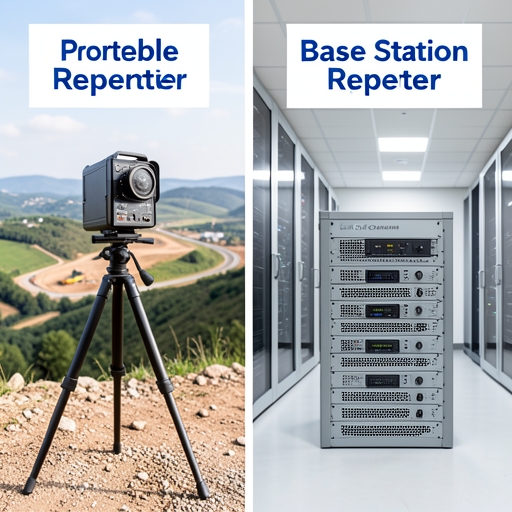
The First Big Choice: Portable Repeater vs. Base Station Repeater
Portable Repeaters (like the Chierda V25): These self-contained units are designed for flexibility and rapid deployment. They are perfect for temporary job sites (like construction or events), emergency response scenarios, or any situation where you need to set up wide-area coverage quickly and then move it.
Base Station Repeaters: These are larger units designed for permanent installation in a facility's IT room or on a rooftop. They are the best choice for providing permanent, building-wide or campus-wide coverage for a hotel, hospital, or factory.
The Second Big Choice: Analog Repeater vs. DMR Repeater
The technology you choose for your repeater should match your radios.
The Analog Repeater: A simple, reliable, and cost-effective way to boost the signal for your existing analog radio fleet. It does one job and does it well: it extends your range.
The
DMR Repeater: If your team uses digital (DMR) radios, a DMR repeater is essential. It not only extends your range but also takes advantage of DMR's key features, like allowing two simultaneous conversations on a single channel (two time slots) and supporting data applications like text messaging and GPS.
The Golden Rule of Installation: Antenna Height is Everything
This is the most critical factor for success. A repeater works by receiving a weak signal and re-broadcasting it with high power from a superior location.
Why Line-of-Sight is Key: Radio waves travel in a relatively straight line. The higher your repeater's antenna, the further it can "see" and the more ground it can cover.
The Higher the Antenna, the Wider the Coverage: Installing your antenna on the roof of the tallest building, on a hill, or on a dedicated tower will yield dramatically better results than a low-level installation.
The ROI of a Repeater: More Than Just Range
Investing in a repeater system provides a clear return on investment.
Enhanced Worker Safety: It eliminates dead zones where a worker in distress might be unable to call for help.
Improved Operational Efficiency: It prevents the delays and mistakes caused by miscommunication, saving valuable time and resources.
From Isolated Radios to a Unified Network: The Power of a Repeater
A repeater is the component that transforms your communication system from a simple collection of individual radios into a true, unified network. It’s the key to unlocking reliable, property-wide coverage and maximizing the value of your radio investment.
FAQ: Your Top Repeater Questions Answered
Do I need a special FCC license for a repeater?
Yes. In the US, operating a repeater requires a specific GMRS or Business Radio license with repeater-specific frequencies. The FCC coordinates these licenses to prevent interference, so your channel will be clear and protected.
What is the typical cost of a repeater system?
The cost can vary widely, but a basic, high-quality repeater unit can be a very affordable investment, often less than the cost of just a few professional-grade handhelds. When you consider the boost in efficiency and safety, the ROI is excellent.
Can my existing handheld radios work with a repeater?
They must be "repeater-capable," meaning they can transmit and receive on two different frequencies. Most professional-grade business radios have this capability. All professional radios from Chierda are repeater-ready.
How do I find the best location to install my repeater antenna?
The highest, most central point is always the best. For complex sites, a professional installer can perform a site survey to identify the optimal location. If you need help designing your system, . Ready to explore your options? Check out