






is your radio powerful enough? While handheld walkie-talkies are great for portability, they have serious limitations when used inside a vehicle. If you need maximum range, crystal-clear audio, and unwavering reliability, it's time to upgrade. This guide will introduce you to the world of the mobile two way radio—the ultimate tool for professional fleet communication.
What is a Mobile Radio (and When Do You Need to Upgrade)?
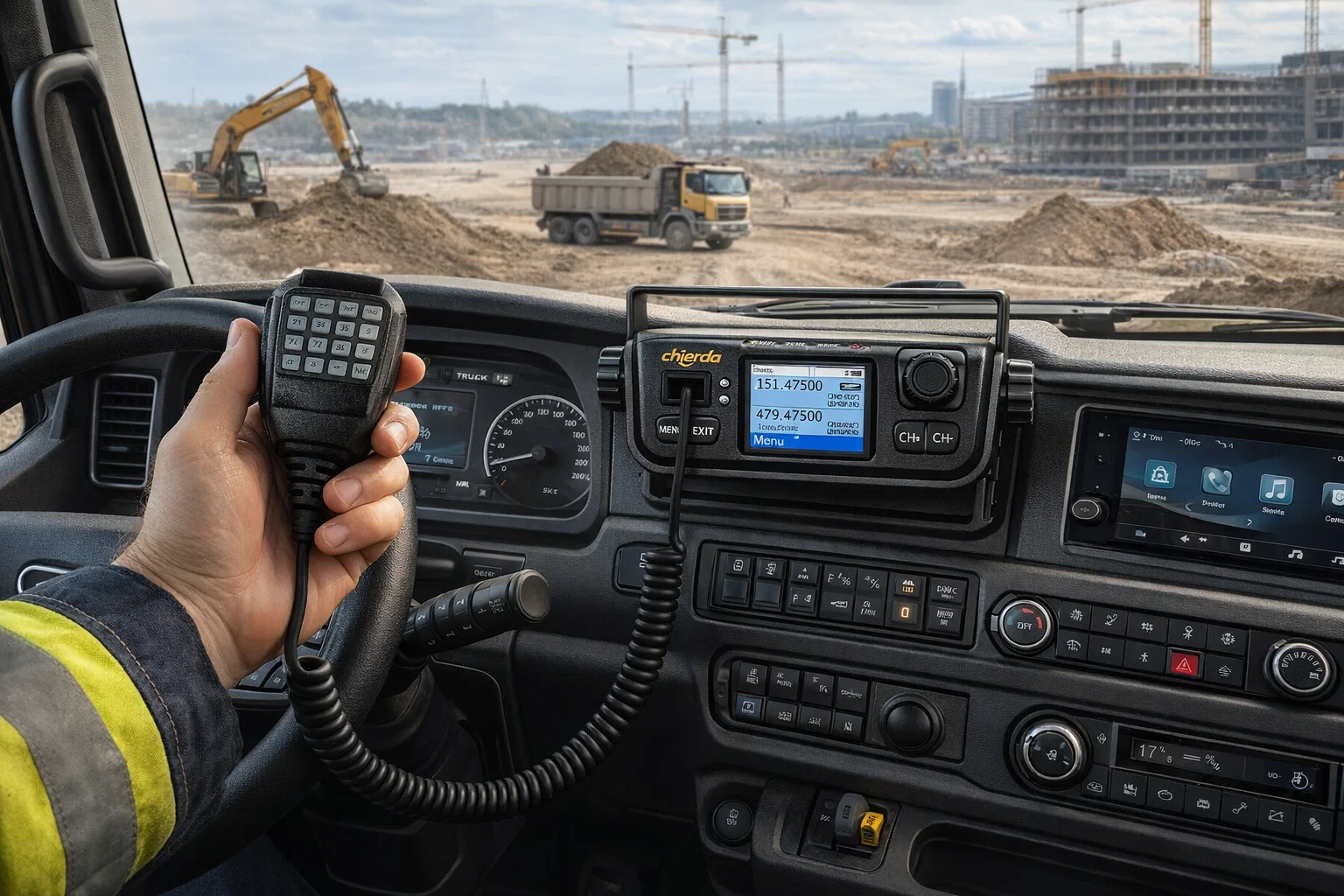
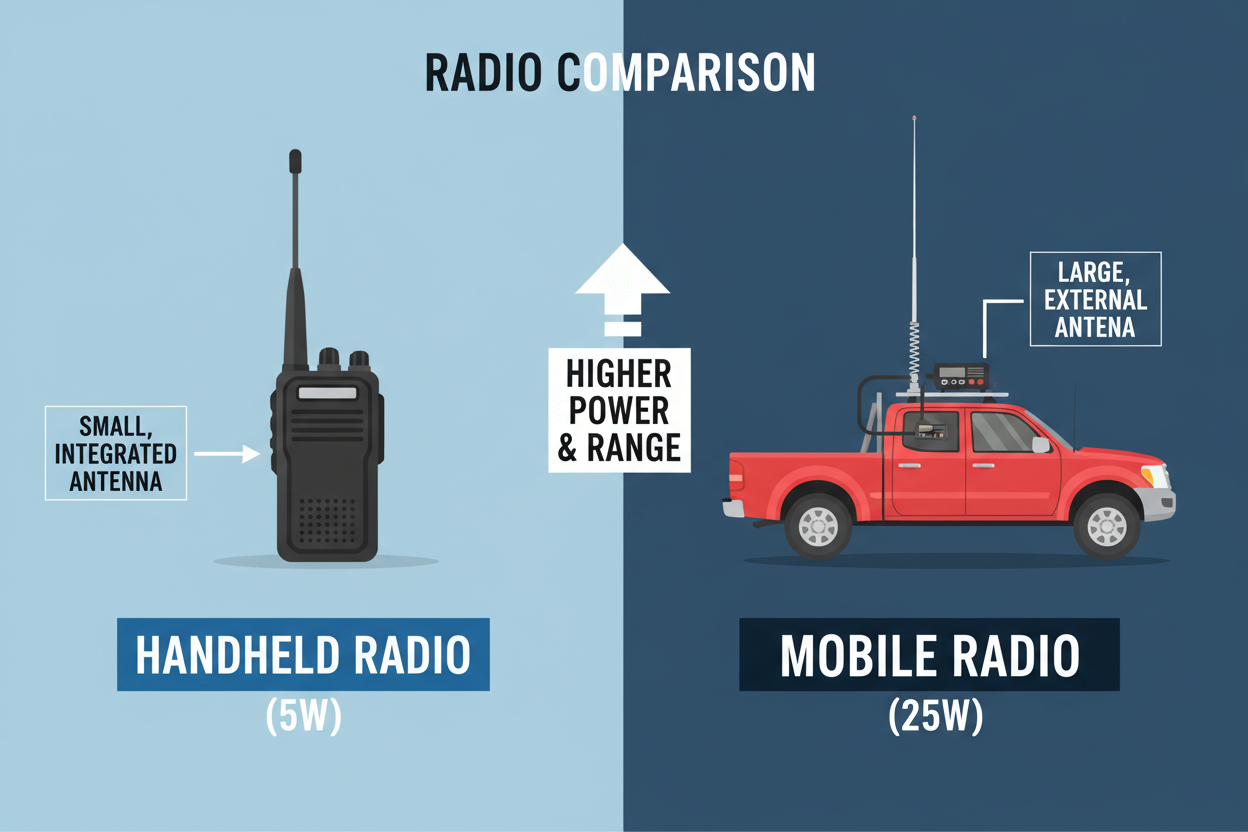
A mobile two way radio, also known as a vehicle mounted radio, is a communication device permanently installed in a vehicle. Unlike a handheld, it draws power directly from the vehicle's battery and uses a much larger, externally mounted antenna.
When to Make the Switch from a Handheld
You need to upgrade from a handheld to a mobile radio if:
You need to communicate over very long distances (beyond 5-10 miles).
Your team operates in hilly or obstructed terrain where signal is a challenge.
You are tired of dealing with dead batteries mid-shift.
You need the most reliable communication possible from your vehicle.
The 3 Game-Changing Advantages of a Vehicle-Mounted Radio
The superiority of a mobile radio comes down to three key engineering advantages.
1. The Power Leap: From 5 Watts to 25+ Watts
A typical handheld radio transmits at 5 watts. A standard high power mobile radio transmits at 25 to 50 watts. This 5x to 10x power increase dramatically boosts your signal strength, allowing you to talk over much greater distances and punch through obstructions that would stop a handheld signal cold.
2. The Antenna Advantage: Getting Your Signal Outside the "Box"
A vehicle's metal body acts like a cage, severely blocking a handheld radio's signal. A vehicle mounted radio uses an external antenna mounted on the roof or trunk. This simple act of getting the antenna outside the metal "box" provides a massive improvement in both transmit and receive capabilities.
3. Unlimited Power: No More "Low Battery" Anxiety
Because the radio is wired directly to your vehicle's electrical system, you have a virtually unlimited power supply. You will never have to worry about a battery dying during a critical conversation or at the end of a long shift.
Key Features to Look for in a Modern Mobile Radio
Today's mobile radios are more than just powerful transmitters.
A Clear, Backlit Display: Essential for seeing your channel, volume, and caller ID at a glance, day or night.
A Full-Featured Microphone: Many modern microphones include keypad controls, allowing you to change channels or navigate menus without taking your hands too far from the wheel.
Digital (DMR) vs. Analog: While analog models are simple and reliable, DMR digital radios offer superior audio clarity, enhanced security, and advanced fleet communication features.
Advanced Options: Look for models with integrated GPS tracking for dispatch and Bluetooth connectivity for hands-free headset use.
Mobile Radio Installation Basics: It's Easier Than You Think
While professional installation is always recommended, the basics of a mobile radio installation are straightforward.
Mounting the Radio Unit: Find a secure spot in your cab, under the dash, or in a center console where you can easily see the display and reach the microphone.
Running Power Safely: The power cable should be run directly to the vehicle's battery (not the fuse box) for the cleanest power and best performance.
Choosing and Mounting Your External Antenna: The antenna should be mounted as high as possible on a metal surface, like the center of the roof, for the best performance.
The Chierda M520D: A Showcase of Next-Gen Mobile Comms
To see all these advantages in one package, look no further than the . It combines high-power DMR digital performance with integrated GPS and Bluetooth, all in a rugged package built by a trusted . It is the perfect command center for any professional vehicle.
For Unmatched Range and Reliability, Go Mobile
For any operation centered around vehicles—be it logistics, construction, agriculture, or public service—a mobile two way radio is not a luxury, it is a fundamental tool for success. It is the single biggest upgrade you can make to your communication system, delivering the power and reliability you need to keep your team connected, no matter the distance.
FAQ: Your Top Mobile Radio Questions Answered
Do I need a different FCC license for a high-power mobile radio?
Yes. High-power mobile radios require an FCC license, such as a GMRS or a Business Radio license. The specific type depends on the frequencies you use. The process is straightforward and essential for legal operation.
What is the best type of antenna for my truck/vehicle?
The best antenna is a "5/8 wave" antenna mounted in the center of your vehicle's roof. This setup provides the most uniform, omnidirectional signal pattern. However, many other types of antennas (like magnetic mounts) are available depending on your needs.
Can a mobile radio in my truck talk to the handheld radios my team is using?
Absolutely! As long as both the mobile radio and the handhelds are programmed to the same frequencies and channels, they can communicate seamlessly. This is a very common and effective setup.
Can I install a mobile radio myself?