






The hidden cost of silence drains your bottom line. Professional two-way radios provide a powerful solution. This guide breaks down the two way radio ROI. We will explore how upgrading your communication system directly drives financial success and operational excellence.
Cell Phones vs. Radios: A Total Cost of Ownership (TCO) Breakdown
Many companies make the mistake of using consumer smartphones for field communication. This seems cheap initially, but the financial reality tells a different story. You must calculate the Total cost of ownership over a three to five-year period.
The Trap of Recurring Cellular Data Fees for Entire Fleets
Smartphones require monthly data plans. Multiply a $40 monthly fee by a fleet of 100 workers. You immediately bleed $48,000 annually just for basic connectivity. Radios operating on private frequencies eliminate these massive, recurring monthly fees.
Device Fragility: The High Cost of Screen Repairs and Replacements
Construction sites, warehouses, and hotel floors destroy fragile smartphones. Consumer devices break easily. You end up paying hundreds of dollars repeatedly for screen replacements and new devices. Professional radios feature shatterproof housings and military-grade durability.
Why the 5-Year TCO of a Radio System is Significantly Lower
A radio requires a higher upfront hardware investment. However, with zero monthly data fees and a dramatically lower replacement rate, the five-year TCO of a professional radio fleet is overwhelmingly lower than a smartphone fleet.
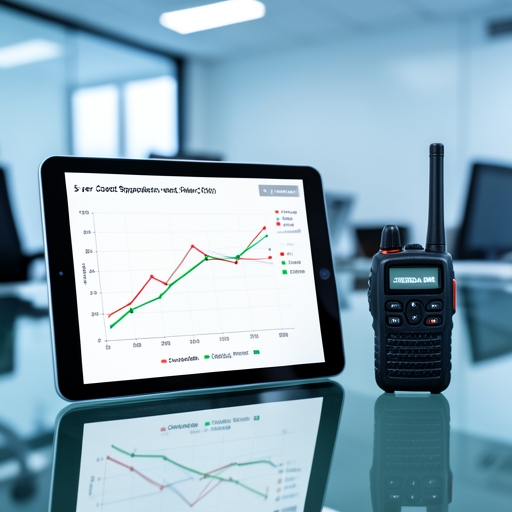
The Productivity Multiplier: Monetizing Instant Communication
Time is money. Two way radio ROI becomes highly visible when you monetize the time saved by instant communication.
The "Push-to-Talk" Advantage: Calculating Time Saved Per Employee
Dialing a phone number, waiting for a connection, and dealing with voicemails wastes minutes. "Push-to-Talk" connects your team in one second. If a radio saves an employee just 10 minutes a day, that equals over 40 hours of recovered labor per year per person.
Streamlining Workflows: How Instant Answers Improve Workplace Efficiency
When an assembly line worker instantly reaches maintenance for a machine fault, production resumes faster. Instant answers eliminate bottlenecks. This rapid coordination will drastically improve workplace efficiency and increase daily output.
Reducing Costly Downtime on the Factory Floor or Construction Site
Downtime is incredibly expensive. A radio system empowers supervisors to redirect resources instantly when unexpected problems arise. You avoid paying idle workers while they wait for instructions.
Risk Mitigation: The Financial Value of Enhanced Workplace Safety
Safety is a moral obligation, but it is also a major financial concern. Radios mitigate risks that lead to massive financial liabilities.
Rapid Emergency Response: Minimizing Damage and Downtime
During a fire, medical emergency, or security breach, instant "All-Call" radio features alert the entire facility simultaneously. A faster response minimizes physical damage to your facility and reduces costly operational downtime.
Protecting Staff with Lone Worker and Man-Down Alerts
If an isolated worker falls or becomes unresponsive, advanced digital radios send automatic distress signals. This swift action saves lives and prevents minor injuries from becoming catastrophic liabilities.
How Better Safety Can Lower Insurance Premiums and Liability
Insurance companies reward proactive risk management. Demonstrating a robust, radio-based emergency response protocol can often help you negotiate lower workers' compensation and liability insurance premiums.
Why Upgrading to Digital Maximizes Your Business Radio Investment
To achieve the absolute highest ROI, organizations must upgrade to modern digital systems like DMR (Digital Mobile Radio) or PoC (Push-to-Talk over Cellular). This transforms a basic business radio investment into a smart, data-driven strategy.
Beyond Voice: The Efficiency of Text Messaging and Work Ticketing
Digital radios send text messages and digital work tickets. Dispatchers can send an address directly to a driver's screen. This eliminates verbal misunderstandings, reducing costly delivery errors and rework.
Fleet Management: Using GPS Tracking to Optimize Fuel and Routing
Modern digital radios include GPS technology. Dispatchers see their entire fleet on a live map. You can optimize travel routes, reduce idle time, and dramatically cut your annual fleet fuel costs.
The Scalability of Modern DMR and PoC Systems
Digital systems scale easily as your company grows. You do not need to replace your entire infrastructure when you hire more staff. This scalability protects your initial capital investment long-term.
Stop Spending on Inefficiency. Start Investing in Connectivity.
Relying on outdated communication methods is no longer a viable business strategy. Upgrading your communication system is not an expense; it is a vital investment that protects your profit margins. Take control of your operations, boost your productivity, and maximize your walkie talkie cost benefit today.
FAQ: Budgeting and Deployment Questions Answered
Q1: What is the expected lifespan of a commercial-grade two-way radio?
With proper care, a high-quality commercial radio lasts between 5 to 7 years. You will likely only need to replace the rechargeable batteries every 18 to 24 months, keeping your long-term maintenance costs very low.
Q2: Are two-way radio purchases tax-deductible as business equipment?
Yes. In most jurisdictions, communication equipment purchased for business operations is considered a capital expense. You can usually deduct the cost of the hardware and infrastructure from your business taxes.
Q3: How much hidden cost is involved in FCC licensing and setup?
FCC licensing fees are straightforward and relatively inexpensive, usually valid for 10 years. We help you navigate the process transparently, ensuring no hidden regulatory fees surprise your accounting department.
Q4: Do we face significant downtime when training staff on a new radio system?
No. Modern radios are designed for intuitive use. Most staff learn the basic Push-to-Talk functions in under five minutes. For a customized financial analysis and a complete system quote, please